VersaHammer: A Furniture Designer’s Eye Applied to a Tool
When people think of furniture design, they often picture form, atmosphere, and materiality. When they think of tools, they imagine function, efficiency, and durability. For Tinglung (Steve) Chang, these worlds are not separate—design, at its best, is where beauty, utility, craft, narrative, and system thinking meet.
Tinglung (Steve) Chang, a 2023 graduate of RISD’s Master of Industrial Design program, has built a practice that moves fluidly across furniture, lighting, spatial experience, and product design. His work focuses on how objects—regardless of scale—shape the way we live, work, and engage with our environment.
In 2025, his project, VersaHammer, received the Silver Award in Product Design at the MUSE Design Awards, marking his second international recognition from MUSE. Earlier the same year, his interior project Timeless Luxury in a Studio Suite of Black, Gold, and Passion won the Gold Award in Interior Design, celebrating his ability to create richness and narrative within compact living spaces.
But VersaHammer is more than a multifunctional tool—it is a statement about what product design can become.
VersaHammer: A Furniture Designer’s Eye Applied to a Tool
Rather than treating tools as purely utilitarian, Tinglung Chang approached VersaHammer with the same sensitivity he brings to furniture: proportion, material, craft, and user experience.
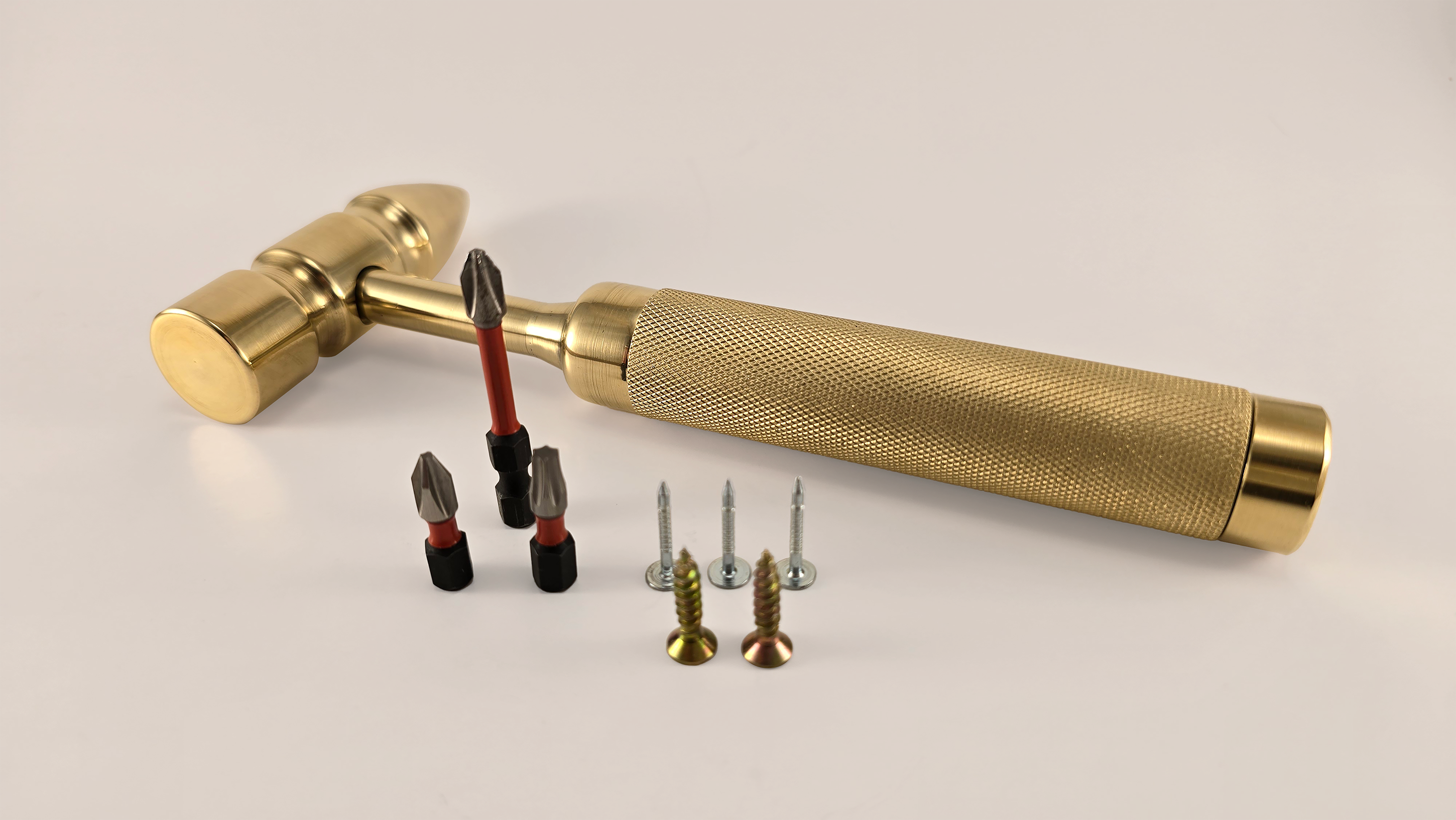
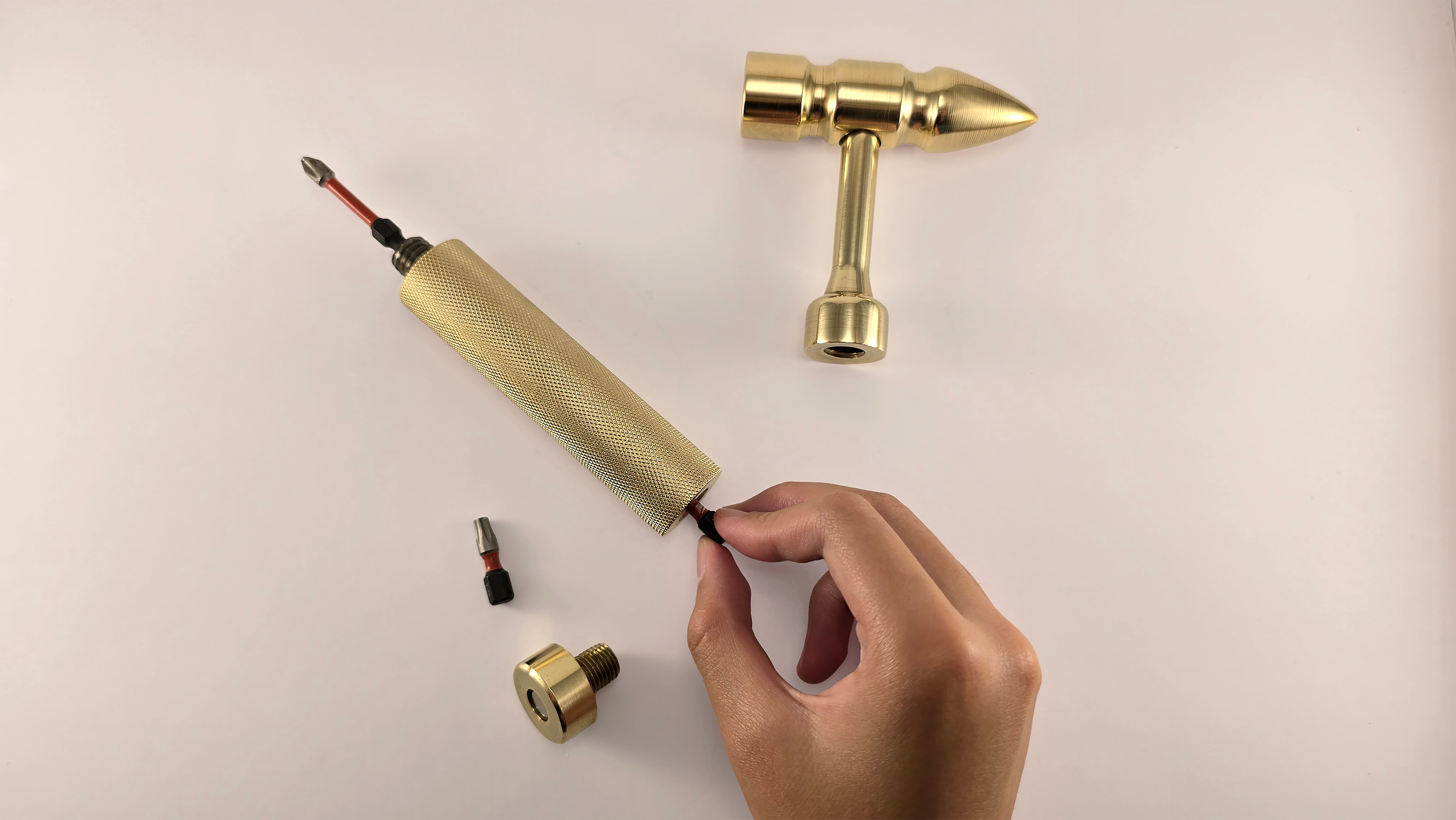
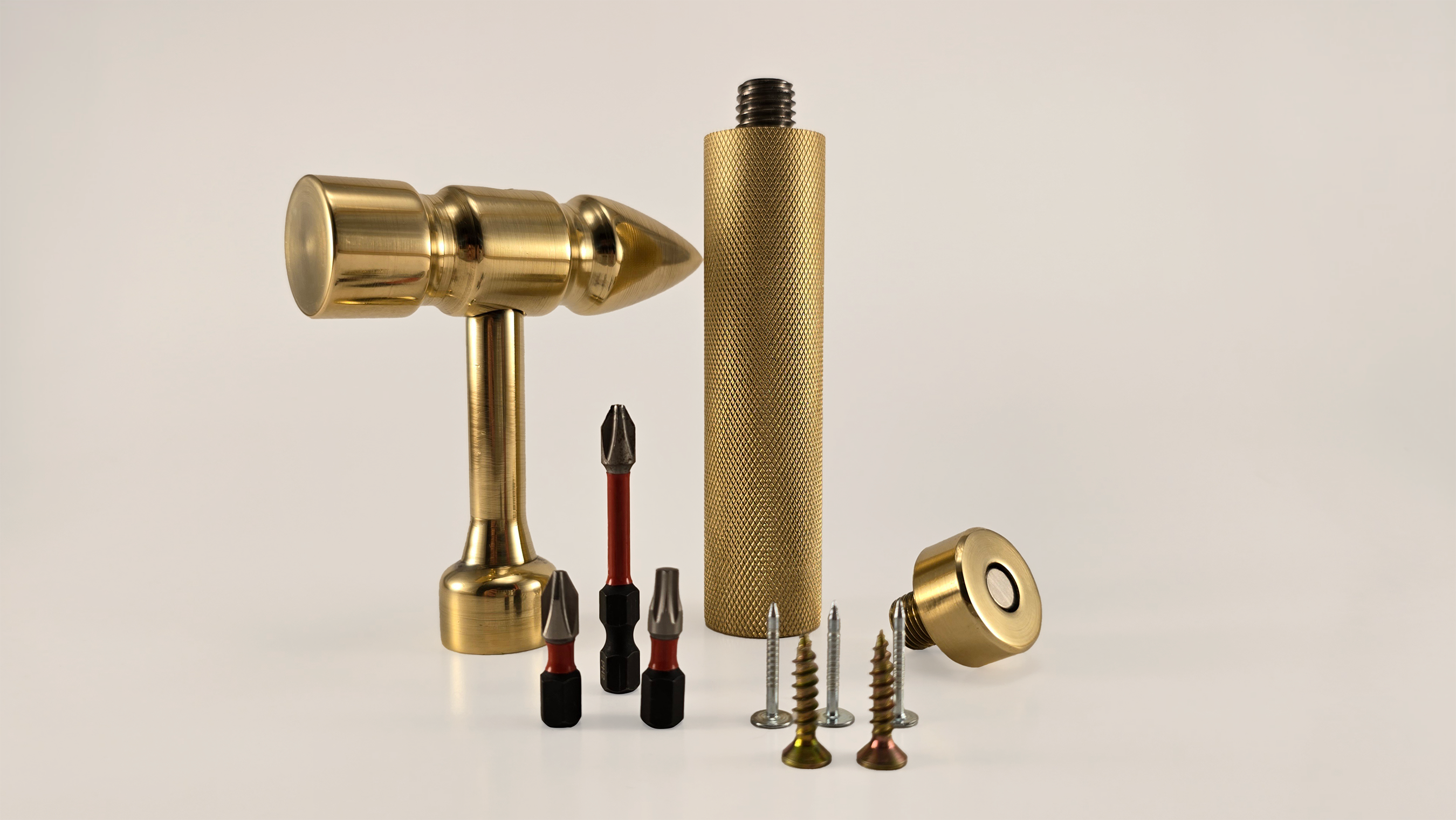
The tool combines hammering, screwdriving, and nail removal into a single refined object:
Precision-machined brass gives the hammer a refined weight balance and a visually striking, timeless finish.
A hollow handle discreetly stores magnetic screwdriver bits for quick access.
An integrated magnetic cap at the base secures screws and nails during tasks.
A circular slot on the hammer head transforms into a nail puller, enabling effortless extraction with simple leverage.
It is elegant yet engineered, functional yet crafted.
“I didn’t just want the tool to work—I wanted it to have presence,” Tinglung Chang says.
“Design should make even ordinary tasks feel intentional.”
Same Design Mindset, Different Scale
Although many first discovered Chang through his interior and furniture work, his approach has always been consistent:
Design is a way of thinking that can scale up or down.
In a space, he considers how materials and light create narrative.
In furniture, he examines structure, proportion, and interaction.
In a hand tool, he refines ergonomics, motion, and clarity of use.
His MUSE Gold-winning interior project succeeded not only because of aesthetics, but because he applied this object-level logic to space:
How do materials collaborate? How does structure support behavior? How does the user experience tell a story?
VersaHammer then brings that same thinking to the smallest scale—from room, to furniture, to the palm of the hand.
Design Is Not Only What You Make, but How You Build It
In his current role at MacKenzie-Childs in New York, Chang designs furniture and lighting collections while actively contributing to the way products are developed and coordinated across teams. He believes that great design must extend beyond the final object and into the systems that support it.
“Good design isn’t just the outcome—it’s the process that makes meaningful outcomes repeatable.”
This mindset allows him to bridge creativity and implementation, vision and execution.
The RISD Influence: Prototype, Question, Integrate
When asked how RISD shaped him, Chang doesn’t mention a single project—he talks about a way of thinking.
At RISD, he learned to:
Explore materials through making
Prototype as a way of discovering ideas
Move between craft, product, and narrative
Question assumptions and define the problem before solving it
“RISD taught me to see design not as a style, but as a language.”
This language now allows him to navigate across disciplines without losing depth or identity.
Looking Forward: Beyond Products, Toward Design as Cultural Experience
Chang believes the next evolution of product design goes beyond function or aesthetics. He sees a future where design integrates:
Craft and technology
Modularity and sustainability
Narrative and usability
Emotional connection and everyday efficiency
“Whether it’s furniture or a hammer, design shapes how we live, how we interact, and how we feel.
I want to create objects and systems that make that experience more thoughtful—and more human.”
Rather than choosing between space, furniture, or tools, he is building a design language that connects them all.
From interiors to objects, from narrative to function,
Tinglung Chang isn’t switching disciplines—he is expanding what design can be.